
Difference between E1 visa and E2 Visa?
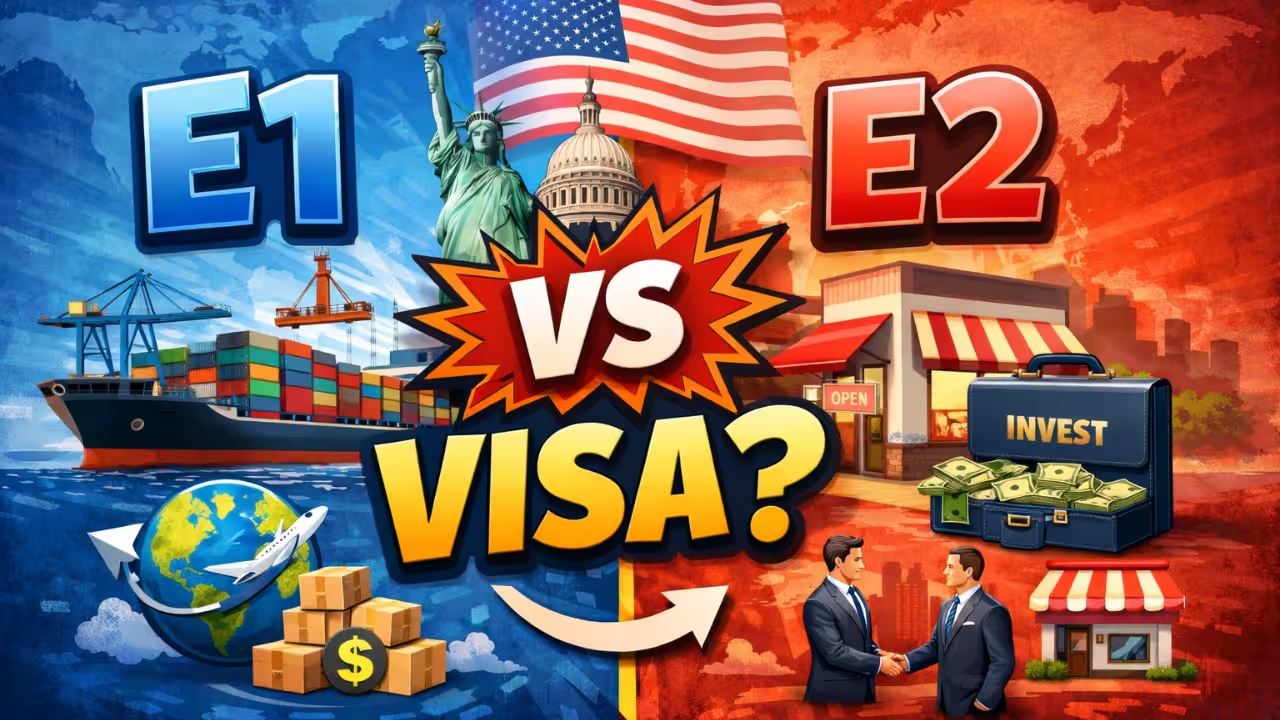
It’s pushing 8:45 PM in Islamabad, cold outside, and you’re probably deep in visa tabs right now. Whether you’re in Pakistan planning to expand your family export game or a Pakistani guy in Dubai/UAE looking for U.S. options, the E1 visa Vs E2 visa are the two main treaty visas that let you go live and work there based on business. Both are nonimmigrant (no automatic green card), both renewable forever if things go well, but they hit different types of entrepreneurs.
From what I’ve seen with friends—one guy in Lahore does heavy textile exports and went E-1, another in Karachi invested in a small U.S. coffee spot and got E-2—E2 is the crowd favorite for most Pakistanis. E-1 is solid if trade is your main thing. And UAE nationals? Tough luck directly—UAE has no treaty with the U.S. for either visa. Pakistan does (since the 1960s treaty), so we’re in a good spot. Emiratis often grab a Grenada passport or something to qualify.
This is straight from current USCIS/State Department stuff—no changes in early 2026 that mess with Pakistan or UAE eligibility. Let’s break it down like we’re sitting at a dhaba
E-1 Visa – The One for Traders
What is the E1 visa? It’s basically the treaty trader visa. For people whose business does a lot of buying and selling between the U.S. and their home country. Goods, services, tech, tourism, whatever—as long as there’s real, ongoing trade.
The big thing: More than half your international trade has to be with the U.S. Not one big shipment—lots of transactions, steady flow, decent money moving. No need to pour in massive cash upfront; it’s about proving the trade is “substantial” (they look at volume, value, frequency).
Who gets it?
- You have to be from a treaty country (Pakistan yes, UAE no).
- Own the company or be a key employee (executive type or special skills needed for the trade).
- Company owned 50%+ by treaty nationals.
- Trade examples: Shipping Pakistani rice/mangoes to US buyers, bringing back American equipment or software.
Family gets in too—spouse can work anywhere (just show your entry stamp), kids under 21 study. You get up to 2 years first time, extend as long as trade keeps going.
How to apply: DS-160 form, extra trade supplement, interview at Islamabad consulate (or Karachi). Bring invoices, shipping papers, bank statements—lots of proof. Takes 2-6 months normally. Get an E1 Visa lawyer if your trade history is thin—they make the numbers look solid.
Problem: Trade drops off? Visa gone. No easy green card path—you’d switch to something like EB-5 later.
For Pakistanis: Perfect if you’re already exporting/importing. Not as common as E-2 because most want to start something new in the U.S.
For UAE: Straight blocked—no treaty.
E-2 Visa – The One for Investors
What is the E2 visa? Treaty investor visa. You put real money into a U.S. business and run it yourself (or control it big time).
You invest “substantial” cash—usually $120k to $300k or more, depending on the business (franchise, shop, consulting, trading company). Money has to be at risk, from clean sources, and committed (can’t pull it back easy). Business needs to be active, not a hobby—should make enough to support you and hopefully grow/create some jobs.
Requirements:
- Treaty country passport (Pakistan yes, UAE no).
- Own at least 50% or have control to direct it.
- Business plan is key—shows it'll work, make money, not marginal.
- Investment proportional (cheaper business needs higher % invested).
Family: Spouse works freely (big plus), kids study till 21 (but they age out, so plan ahead).
Apply: Consulate interview (Islamabad), strong business plan + fund proofs. E2 visa lawyer or attorney helps avoid rejections—super common. 2-6 months processing.
Renew every 2-5 years forever if the business stays alive. Easier to go green card later (E-2 visa to green card) using profits for EB-5 or other paths.
For Pakistanis: This is the go-to. Tons of guys start small U.S. ops, renew, build up, then maybe upgrade. Quick way to test America.
For UAE: Same—no treaty. Need a qualifying passport first.
Quick Comparison – What Really Matters
E-1 is trade-focused: Prove ongoing deals with US, low cash needed, but tied to that flow.
E2 is investment-focused: Put money in, run a US business, more flexible long-term.
Money: E-1 almost none upfront; E-2 real investment.
Proof: E-1 trade docs; E-2 business plan + bank wires.
Flexibility: E-1 risk if trade slows; E-2 you can pivot.
Family: Pretty much same perks.
Green card: Both indirect, E-2 smoother bridge.
Pakistan: E-2 wins for most; E-1 for pure traders.
UAE: Neither without extra passport.
Bottom line—if trade is your bread and butter (exporting stuff already), lean E-1. If you want to invest and build in the U.S., E-2 all the way.
Both skip some immigrant pauses (treaty stuff keeps moving). Lawyer early—Islamabad consulate picky on details.
Disclaimer:
Some content on this website may be created or assisted using AI technology and is provided for general informational purposes only. It does not constitute legal, tax, accounting, financial, or immigration advice. Please consult a qualified professional for advice specific to your situation.


 Total views : 542663